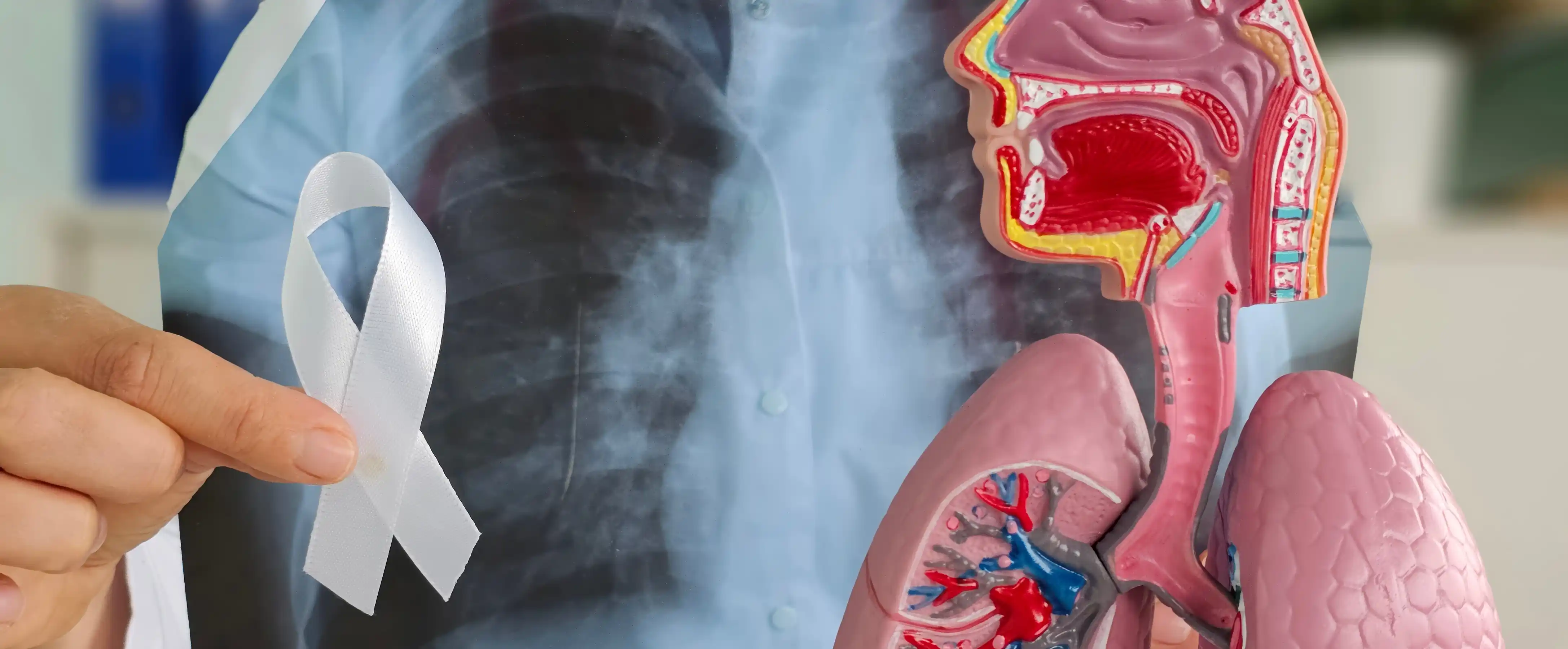
Key Takeaways
- November is Lung Cancer Awareness Month, a good time to learn why finding lung cancer early matters.
- Early lung cancer often causes no symptoms, so it can go unnoticed until it has spread.
- Nationally, only 28.1 percent of lung cancer cases are found at an early stage, according to the American Lung Association.
- Yearly low-dose CT (computed tomography) screening can lower the lung cancer death rate by up to 20 percent for people at high risk.
- Altoona Lung Specialists offers lung cancer screening and an early detection program in Altoona, PA. Request an appointment to find out if screening is right for you.
What Lung Cancer Awareness Month Aims to Highlight Nationally
November is Lung Cancer Awareness Month. The goal is simple: help people understand the disease, learn who is at risk, and know that a screening test exists.
The need is clear. Lung cancer is the leading cause of cancer deaths in the United States, according to the American Lung Association. Survival is much higher when lung cancer is found at an early stage.
Awareness matters because screening only works when people know about it. A patient who has never heard of lung cancer screening cannot ask a doctor about it.
Why Lung Cancer Often Goes Undetected Until Later Stages
Lung cancer usually does not cause symptoms in its early stages, as noted on the Lung Cancer Early Detection Program page at Altoona Lung Specialists. A person can feel healthy while a small growth develops in the lungs.
By the time symptoms such as a lasting cough or shortness of breath appear, the cancer may have spread. That is why the numbers look the way they do. The American Lung Association reports that:
- Only 28.1 percent of lung cancer cases in the United States are diagnosed at an early stage.
- Only 18.2 percent of people at high risk have been screened.
The gap between those two groups shows how many people could benefit from learning about screening.
How Screening Fits Into Early Detection Efforts
Screening means testing people who have no symptoms, with the goal of finding cancer before it causes problems. For lung cancer, the test is a low-dose CT scan, often called an LDCT. It takes detailed pictures of the lungs using a small amount of radiation.
At Altoona Lung Specialists, preparing for a lung cancer screening is simple and painless. The care team also explains what the results mean and what comes next.
Screening vs. Diagnostic Testing
Screening and diagnostic testing are not the same thing. The table below shows the difference.
| Lung Cancer Screening | Diagnostic Testing | |
|---|---|---|
| Who it is for | People with no symptoms who are at high risk | People who already have symptoms or an unusual finding |
| Main goal | Find lung cancer early, before symptoms start | Find the cause of a symptom or finding |
| Typical test | Low-dose CT scan | CT scan or other tests chosen by a doctor |
| How often | Once a year for those who qualify | Based on the doctor's plan |
The American Cancer Society recommends yearly LDCT screening for people ages 50 to 80 who smoke or used to smoke and have at least a 20 pack-year history. A pack-year measures smoking history. One pack a day for 20 years equals 20 pack-years. People who already have symptoms should see a doctor right away rather than wait for screening.
What Patients Can Do This November to Learn Their Risk
Awareness turns into action with a few simple steps. This month, patients can:
- Add up their smoking history by multiplying packs per day by years smoked.
- Note their age and how long ago they quit, if they stopped smoking.
- Write down other exposures, such as radon, which the American Lung Association calls the second leading cause of lung cancer in America.
- Ask a primary care provider or pulmonologist whether screening makes sense.
- Ask about help to quit, since tobacco cessation support is available in Altoona.
A short list like this makes the doctor visit more useful. It also gives the care team the facts needed to decide if screening is right.
How to Take the Next Step Toward Screening Locally
Patients in the Altoona area do not need to travel far. Altoona Lung Specialists runs a Lung Cancer Early Detection Program through the Lung Disease Center of Central PA. More than 300 patients have enrolled so far, and the practice continues to enroll people at high risk.
The care team includes pulmonologists who can review a patient's history and explain screening options. The office is at 800 Chestnut Ave. in Altoona.
Schedule Lung Cancer Screening With Altoona Lung Specialists in Altoona, PA
Lung Cancer Awareness Month is a reminder that early detection gives patients more options. Screening is the best tool available for people at high risk, and the first step is a conversation about personal risk.
Request an appointment with Altoona Lung Specialists to talk about lung cancer screening, or call 814-946-2845. Visit the Altoona Lung Specialists homepage to learn about other pulmonary services.
Frequently Asked Questions
When is Lung Cancer Awareness Month?
Lung Cancer Awareness Month takes place every November. It highlights why early detection matters and who may benefit from screening.
Does early lung cancer cause symptoms?
Usually not. Early lung cancer often has no symptoms, which is why screening is offered to people at high risk even when they feel well.
What is a low-dose CT scan?
A low-dose CT scan, or LDCT, is a quick imaging test that takes detailed pictures of the lungs using a small amount of radiation. It is the screening test used for lung cancer.
Who should get a lung cancer screening test?
The American Cancer Society recommends yearly screening for people ages 50 to 80 who smoke or used to smoke and have at least a 20 pack-year history. A doctor can confirm whether screening fits.
Where can I get lung cancer screening in Altoona, PA?
Altoona Lung Specialists offers lung cancer screening at the Lung Disease Center of Central PA, 800 Chestnut Ave., Altoona. Call 814-946-2845 or request an appointment online.
