Key Takeaways
- A sleep study, or polysomnography, records brain waves, eye movement, muscle tone, breathing, heart rhythm, and blood oxygen levels overnight.
- Each measurement helps a sleep physician identify a specific type of disruption, from airway blockages to abnormal limb movements.
- All of the overnight data is combined into a sleep stage report that shows how the body moved through the night.
- Understanding what each channel measures makes the process feel far less intimidating for first-time patients.
- Altoona Lung Specialists performs comprehensive polysomnography on-site through the Sleep Disorder Network of the Lung Disease Center of Central Pennsylvania. Request an appointment to schedule a sleep study.
Brain Activity, Eye Movement, and Muscle Tone Tracked During Sleep
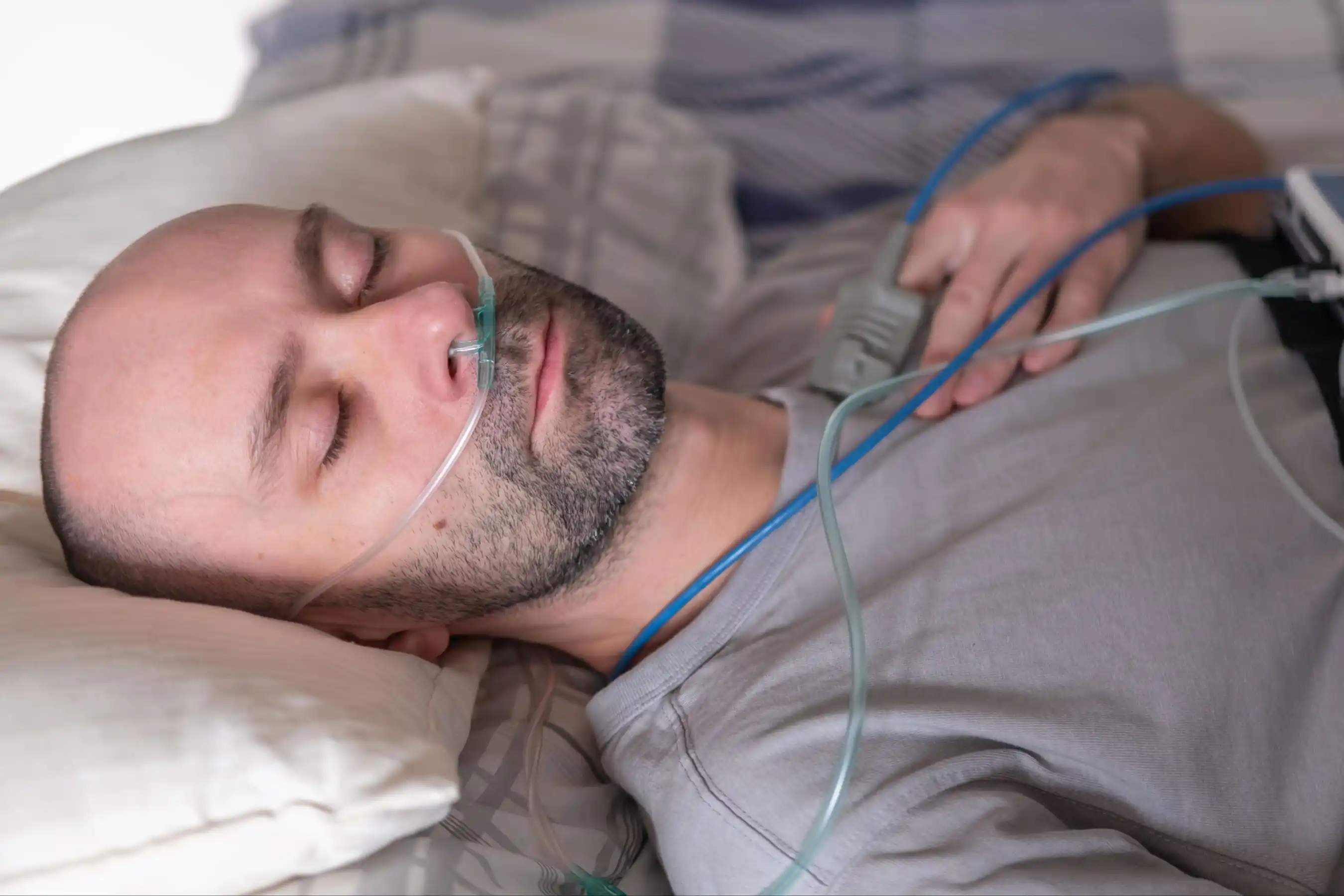
A polysomnogram, more commonly called a sleep study, is a multi-parameter test that records several body functions at once while a patient sleeps. According to the National Heart, Lung, and Blood Institute, the most common type of sleep study records brain waves and monitors heart rate, breathing, and blood oxygen levels over a full night of sleep.
Three of the core measurements are:
- Brain waves (EEG): Small sensors placed on the scalp track electrical activity in the brain. This data shows when a patient is awake, in light sleep, in deep sleep, or in REM sleep.
- Eye movement (EOG): Sensors placed near the eyes detect the rapid eye movements that occur during REM sleep, helping technicians pinpoint when dreaming sleep begins and ends.
- Muscle tone (EMG): Sensors on the chin and legs measure muscle activity. Muscle tone naturally drops during sleep, and a further drop during REM sleep is normal. Unusual muscle activity can point to conditions like periodic limb movement disorder.
How Breathing and Oxygen Levels Are Monitored Overnight
Airflow sensors near the nose and mouth track breathing rate and detect pauses or shallow breaths, while belts around the chest and abdomen measure the effort behind each breath. A small clip called a pulse oximeter, worn on a finger or earlobe, measures the oxygen level in the blood throughout the night.
These readings are especially important for identifying sleep apnea. Repeated drops in airflow paired with a drop in blood oxygen are what allow a sleep physician to diagnose obstructive sleep apnea and determine how severe it is. Sleep apnea severity is generally measured using the Apnea-Hypopnea Index, or AHI, which counts the number of breathing disruptions per hour of sleep. According to Sleep Foundation, an AHI of 5 to 14 is classified as mild sleep apnea, 15 to 29 as moderate, and 30 or more as severe.
What Heart Rhythm Monitoring Adds to the Picture
A sleep study also tracks heart rhythm using a small number of ECG leads placed on the chest. This allows the sleep team to watch for any irregularities that occur alongside breathing disruptions, since sleep apnea can place extra strain on the heart. Combining heart rhythm data with airflow and oxygen readings gives a more complete view of how a breathing disruption affects the rest of the body in real time.
How All This Data Comes Together Into a Sleep Stage Report
Once the overnight recording is complete, a scorer reviews the data in short intervals, typically 30 seconds at a time, and labels each interval as wake, light sleep, deep sleep, or REM sleep. This produces a sleep stage report that includes:
| Measurement | What It Tracks | What It Helps Diagnose |
|---|---|---|
| EEG (brain waves) | Sleep stages and wake periods | Insomnia, unusual arousals |
| EOG (eye movement) | Rapid eye movement during REM | Timing and amount of REM sleep |
| EMG (muscle tone) | Muscle activity in chin and legs | Periodic limb movement disorder, REM behavior disorder |
| Airflow and effort belts | Breathing rate and pauses | Obstructive and central sleep apnea |
| Pulse oximetry | Blood oxygen saturation | Severity of breathing disruptions |
| ECG | Heart rhythm | Cardiac irregularities linked to sleep apnea |
A sleep medicine physician reviews the finished report alongside the patient's medical history and symptoms before sending results and treatment recommendations back to the referring provider.
Why Each Measurement Matters for an Accurate Diagnosis
No single sensor tells the whole story on its own. Loud snoring alone does not confirm sleep apnea, and low muscle tone alone does not confirm REM sleep. It is the combination of brain activity, breathing, oxygen levels, and heart rhythm together that allows a sleep physician to reach an accurate diagnosis and recommend the right treatment.
Schedule a Sleep Study With Altoona Lung Specialists
Understanding what a sleep study measures can make the process feel far less overwhelming, especially for first-time patients. Every sensor plays a specific role in building a complete picture of how the body rests, breathes, and recovers overnight.
Altoona Lung Specialists performs comprehensive polysomnography on-site through the Sleep Disorder Network of the Lung Disease Center of Central Pennsylvania. Request an appointment to schedule a sleep study or discuss ongoing sleep concerns.
Frequently Asked Questions
What can a sleep study diagnose?
A sleep study can help diagnose obstructive and central sleep apnea, periodic limb movement disorder, REM behavior disorder, narcolepsy, and other conditions that disrupt normal sleep patterns.
What happens during a sleep study?
Sensors are placed on the scalp, face, chest, and legs to record brain waves, eye movement, muscle tone, breathing, and heart rhythm. A pulse oximeter also tracks blood oxygen levels. A sleep technician monitors the study overnight from an adjacent room.
How are stages of sleep determined from brain waves?
A scorer reviews the EEG recording in short intervals and classifies each one as wake, light sleep, deep sleep, or REM sleep based on distinct brain wave patterns.
Does a sleep study near you require staying overnight at a facility?
Many sleep studies are performed overnight at a sleep lab, but some patients may qualify for a home sleep apnea test using a simplified set of sensors. A physician determines which option fits a patient's symptoms.
How long does it take to get sleep study results?
After the overnight recording, a scorer reviews the data and a sleep medicine physician interprets the full report. Turnaround time varies, but the referring provider typically receives results along with treatment recommendations within a few weeks.
